UK Small Business Website Cost Explained
"So, how much does a small business website cost?"
That's a bit like asking, "How much is a car?" The answer completely depends on what you need it to do. Are you after a simple runaround, or a high-performance machine? A basic, do-it-yourself website might only set you back £100 to £300 a year. But a professionally built, custom site? That can range anywhere from £500 to over £30,000.
Your Quick Guide To UK Website Costs
Getting a straight answer on website pricing can be a real headache. You know you need to be online, but it's tough to budget when all you get are vague estimates. Let's cut through the noise and give you a clear, straightforward look at what you should expect to pay for a new website in the UK.
Think of it this way: building a website is like choosing how you'll get around town. You could build a reliable bicycle yourself (the DIY route), hire a skilled mechanic to build a solid car (a freelancer), or bring in a whole team of engineers to create a high-performance vehicle (an agency). Each gets you from A to B, but the cost, speed, and features are worlds apart.
Setting Your Financial Expectations
Before we dive into the nitty-gritty, let's map out the financial landscape. Your total investment really boils down to two things: who builds the site and what you need it to do. There are three main paths you can take, and each comes with its own price tag.
Generally, small business website design costs in the UK fall into fairly clear tiers. A DIY approach, for instance, can be as little as £100 but could go up to around £3,000 if you buy premium tools. If you hire a good freelance designer for a sharp-looking brochure site, you're typically looking at somewhere between £500 and £3,000. For a completely custom website built by a larger UK agency, the investment can easily climb to between £15,000 and £30,000. You can find more detailed pricing breakdowns and see exactly how those figures are calculated.
The biggest mistake I see business owners make is focusing only on the upfront design fee. A smart website budget always accounts for both the initial build and the essential ongoing costs needed to keep it secure, running smoothly, and actually visible to your customers.
To give you a clearer picture, here’s a quick summary of what to expect from each approach.
Typical Website Cost Tiers At A Glance
| Approach | Typical Upfront Cost (UK) | Best For |
|---|---|---|
| DIY Website Builders | £0 – £500 | New businesses, sole traders, or anyone needing a simple online brochure on a tight budget. |
| Freelance Web Designers | £500 – £5,000 | Established small businesses needing a professional, custom look without agency overheads. |
| Web Design Agencies | £5,000 – £30,000+ | Businesses planning for serious growth, complex projects like e-commerce, or those needing a full strategy team. |
As you can see, the right choice really depends on where your business is today and where you want it to be tomorrow.
The Three Tiers of Website Investment
Understanding these tiers is the first real step to creating a budget that makes sense for you. Each one serves a different type of business and requires a different level of your own involvement.
-
DIY Website Builders: This is your most budget-friendly option, perfect if you're just starting out or have very simple needs. Platforms like Squarespace or Wix give you full control, but the trade-off is your own time – you'll have to learn the platform and build everything yourself.
-
Freelance Web Designers: The ideal middle-ground. You get a professional's expertise and a custom-designed site without the hefty price tag of an agency. This is a brilliant choice for established small businesses that need to look more polished and professional.
-
Web Design Agencies: The premium option, built for businesses that are serious about growth. Agencies offer the whole package – strategy, design, development, and project management. They're best suited for complex projects, like large e-commerce stores or sites with special functional requirements.
Decoding The Key Cost Drivers For Your Website
Ever wondered why one website quote comes in at £500 while another lands at a staggering £15,000? It’s a huge price gap that can feel confusing, but the answer always comes down to the details. Much like building a house, the final cost of a website depends entirely on the size, complexity, and features you decide you need.
Think of it this way: a basic five-page website is like a well-built garden shed. It's functional, serves its purpose perfectly, and is pretty straightforward to put together. On the other hand, a complex e-commerce store with customer accounts and payment processing is more like building a custom home. It requires detailed blueprints, specialised skills, and complex systems to work properly, which naturally drives up the investment.
This infographic breaks down the total cost into its three main parts.
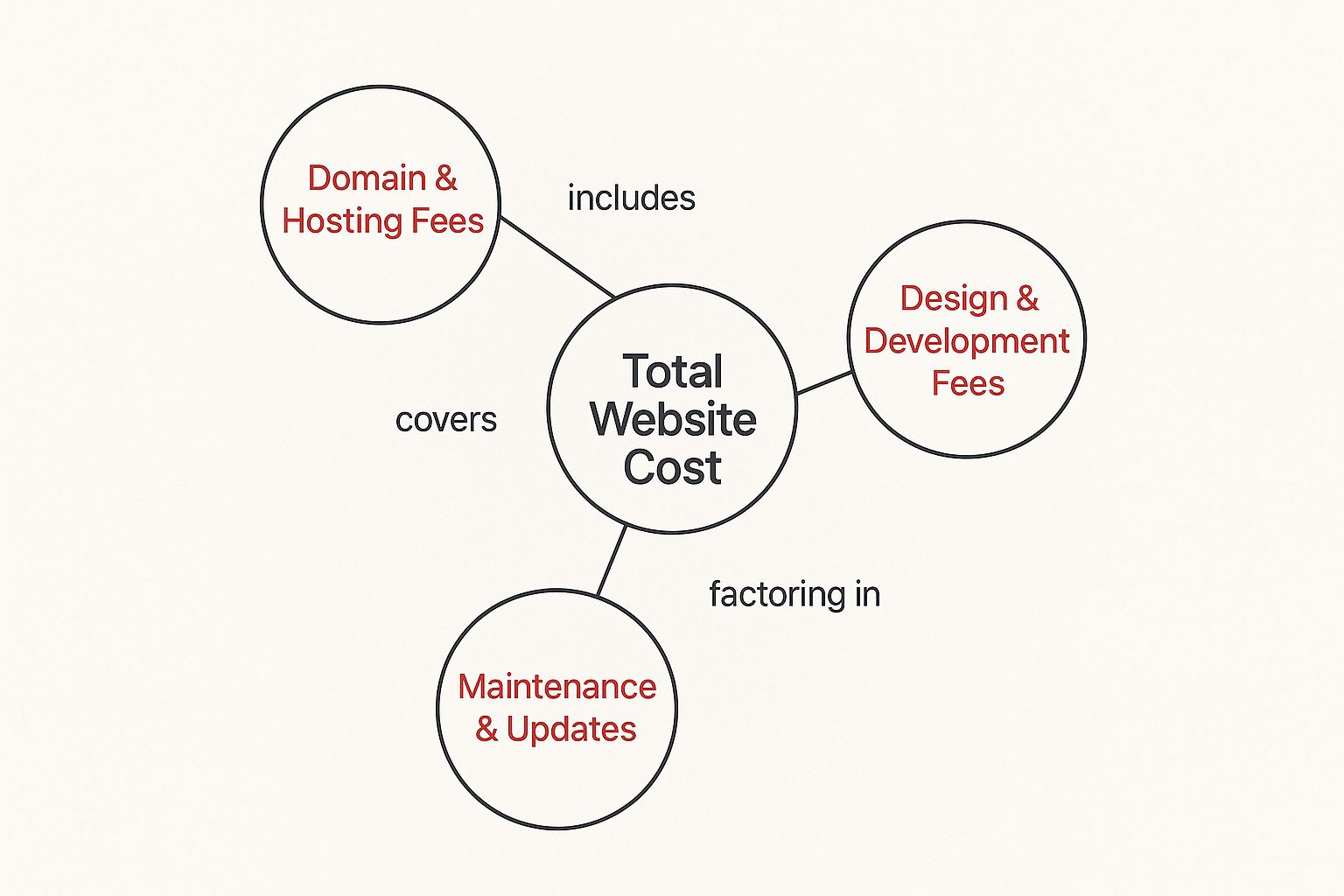
As you can see, the initial design and development work is the biggest piece of the puzzle. But don't forget the ongoing fees for hosting and maintenance – they're essential parts of the total cost of owning a website.
Design And Development Choices
The single biggest factor that will influence your upfront small business website cost is how it's actually designed and built. The choices you make here set the foundation for everything else, directly impacting both the price tag and the quality of the final result. You essentially have two main paths you can go down.
- Template-Based Design: This is the most common and budget-friendly route for small businesses. You start with a pre-designed template and then customise it with your own branding, colours, images, and text. It's a faster and cheaper way to get online because the basic structure is already in place.
- Custom Design: A fully custom or 'bespoke' design is created from a complete blank canvas, tailored specifically to your business goals. This process involves wireframes, mockups, and a lot of back-and-forth with a designer. While it offers total creative freedom, it requires a much larger budget and a longer timeline to get right.
For most small businesses, a professionally customised premium template strikes the perfect balance between quality and value. It gives you a polished, professional look without the high costs of a fully bespoke project.
The Impact Of Functionality
At its core, what does your website need to do? Every feature you add is another layer of complexity, and that complexity translates directly to cost. A simple "digital brochure" site that just provides information is far less expensive than a site that needs to perform specific tasks for your visitors.
Functionality is the engine of your website. A simple site might only need an engine that gets it from A to B. But an online store needs a high-performance engine with many moving parts to handle sales, inventory, and customer data securely.
Think about how these common features affect the price:
- E-commerce: Adding the ability to sell products online is a major cost driver. It involves setting up payment gateways, product pages, inventory management, and serious security measures to protect customer data. A site selling 10 products is far simpler than one managing 1,000.
- Booking Systems: If you run a service-based business, allowing customers to book appointments online adds another layer of development. This usually requires integrating a calendar, managing your availability, and often taking payments upfront.
- Membership Portals: Creating a private, members-only area with exclusive content requires user account management, login systems, and security protocols, all of which add to the build cost.
Content Management System And Scale
Finally, the platform your website is built on—the Content Management System (CMS)—and the sheer size of the site play a crucial role. A CMS like WordPress or Shopify is what allows you to update your site's content yourself without needing to know how to code. While incredibly powerful, the initial setup and customisation can influence the price.
The scale of your website is also a straightforward cost factor. A website with 5 pages is naturally going to be cheaper to build than one with 50 pages. More pages mean more design work, more content to create, and more development time to build and link everything together.
Once your website is built, having a solid plan to get it in front of the right audience is crucial. This is where professional digital marketing services become essential for driving traffic and helping your business grow.
Uncovering The Hidden And Ongoing Website Costs
The figure that gets all the attention is the initial design and build cost. It’s the big number you budget for upfront, but honestly, that’s only half the story. Thinking the spending stops the moment your site goes live is one of the most common—and costly—mistakes a small business owner can make.
Keeping your website secure, effective, and actually visible to customers is an ongoing commitment, not a one-off purchase. These recurring costs, often forgotten in the initial excitement, are absolutely vital for the health and longevity of your online presence. Ignore them, and you might find your shiny new asset turning into a financial headache down the road.
The Essentials: Domain And Hosting
First up, the absolute non-negotiables: your domain name and web hosting. Think of your domain name as your website’s street address, like yourbusiness.co.uk. It’s how people find you, and you have to rent it annually to keep it yours.
Web hosting, on the other hand, is the actual plot of land where your website lives. You’re renting server space from a provider that stores all your site’s files and makes them accessible 24/7. Without hosting, your website simply has nowhere to exist.
- Domain Name Renewal: This is usually a small yearly fee, but it's critical. If you forget to renew, you risk losing your domain name to someone else, which could be a disaster for your brand.
- Web Hosting Fees: This is typically a monthly or annual subscription. The price can vary a lot, depending on how much traffic your site gets and the resources it needs to run without a hitch.
Securing Your Digital Storefront
In this day and age, website security isn't some optional extra; it's a basic requirement. Your customers need to know their details are safe with you, and search engines like Google actively prioritise secure websites in their rankings.
This is where an SSL certificate comes in. An SSL (Secure Sockets Layer) certificate encrypts the data flowing between your site and its visitors. It’s what puts the "s" in "https" and displays that little padlock icon in the browser, signalling to everyone that your site is trustworthy. While many hosting plans now throw in a basic SSL for free, more advanced security features often come with an annual cost.
Neglecting website security is like leaving the front door of your shop unlocked overnight. An SSL certificate is the bare minimum for building trust and protecting both your business and your customers from potential threats.
Ongoing Maintenance And Support
A website isn’t a printed brochure; it's a living, breathing piece of software that needs regular care to function properly. The platform it’s built on (like WordPress), along with all its themes and plugins, is constantly being updated to fix bugs, patch security holes, and add new features.
Skipping these updates can leave your site vulnerable to hackers or simply cause parts of it to break. A website maintenance plan is really an insurance policy for your site's health. This typically involves:
- Regular software and plugin updates
- Daily or weekly website backups
- Security scans to check for malware
- Performance checks to ensure fast loading times
These recurring services all add up. To give you a rough idea, let's look at some typical annual running costs for a small UK business. The table below breaks down the essentials.
Annual Website Running Cost Checklist
| Expense Item | Average Annual Cost (UK) | Why It's Necessary |
|---|---|---|
| Domain Name | £10 – £20 | Your website's address. Non-negotiable. |
| Web Hosting | £100 – £250 | The 'rent' for your website's space on the internet. |
| SSL Certificate | £0 – £90 | Secures customer data and builds trust. Often free with hosting. |
| Professional Maintenance | £400 – £800+ | Keeps your site secure, updated, and running smoothly. |
| Premium Plugins/Themes | £50 – £300 | Annual licences for specific features or designs. |
As you can see, the ongoing fees are a real and critical part of the total small business website cost. For instance, basic UK hosting can be around £140 a year, with a domain costing about £15. Professional maintenance might average £600 annually to keep everything in top shape. It's essential to factor these figures into your budget from day one. You can read more about these annual website running costs to get a clearer picture for your financial planning.
Choosing Your Path: DIY vs Freelancer vs Agency

Alright, you’ve got a handle on the key cost drivers and the ongoing fees. Now comes the big one: who is actually going to build this thing? This decision is probably the most important one you’ll make, as it directly shapes your budget, the timeline, and the quality of your finished website.
It really boils down to a classic trade-off between your time, your money, and the level of expertise you need.
You've got three main paths to choose from. You can roll up your sleeves and do it yourself (DIY), hire a solo expert (a freelancer), or bring in a full team (an agency). Each route has its own clear upsides and downsides, and the right choice for you hinges entirely on your business goals, your budget, and how much time you can realistically sink into the project.
The Do-It-Yourself Route
Going DIY means using platforms like Wix, Squarespace, or GoDaddy to build your site. This option puts you firmly in control and is hands-down the most budget-friendly way to get started. It’s a massive draw for new businesses or sole traders who just need a simple, professional online presence without a hefty upfront investment.
Modern website builders are brilliant; you don't need to know a single line of code. They rely on drag-and-drop editors and ready-made templates to make it all feel pretty straightforward. But be warned: the biggest cost here isn’t money, it’s your time. You become the designer, the copywriter, and the tech support, all in one.
- Best For: New businesses, freelancers, and anyone on a shoestring budget who is comfortable with tech and has the time to learn a new system.
- Pros: The lowest initial cost, total creative freedom, and the ability to make instant updates yourself.
- Cons: It’s a huge time drain, your design is stuck within the limits of a template, and you have no expert to guide you on crucial things like SEO or user experience.
Hiring A Freelance Web Designer
Taking the middle path means bringing a freelance web designer on board. For a lot of small businesses, this is the sweet spot. You get the dedicated skill of a professional who can create a custom-built, polished website that looks nothing like a generic template, all without the high overheads of an agency.
A good freelancer is more than just a designer; they’re a partner. They can give you solid advice on what works, build a site that’s properly optimised for search engines from day one, and make sure it’s a pleasure for your customers to use. You'll be working directly with the person doing the job, which usually makes for a more personal, collaborative process.
Hiring a skilled freelancer is like bringing in a specialist tradesperson to do a job properly. You wouldn't try to rewire your own house without being a qualified electrician; the same logic applies to building a professional website that needs to perform reliably for your business.
This option strikes a fantastic balance between cost and quality. It's a massive leap up from a DIY site and delivers a far more professional and effective tool that can genuinely help your business grow.
Partnering With A Web Design Agency
Going with a web design agency is the premium option. It’s best for businesses with big growth plans, complex needs, or a larger budget to play with. When you hire an agency, you’re not just getting one person; you’re getting a whole team of specialists. This usually includes a project manager, a strategist, a copywriter, an SEO expert, and a team of developers.
This all-in-one approach means an agency can manage everything from start to finish—market research, strategy, design, development, and even ongoing marketing. They are set up to handle big, complicated projects like e-commerce stores with thousands of products or websites that need custom software integrations.
- Best For: Growing businesses, e-commerce brands, and companies that need a complete, strategy-led digital solution.
- Pros: You get access to a wide range of expertise, a structured and managed process, and the capacity to handle seriously complex projects.
- Cons: It’s the most expensive option by a long shot, and the process can sometimes feel less flexible than working one-on-one with a freelancer.
Ultimately, the right path is all about your specific situation. A local plumber might find a DIY site is the perfect starting point, while a fast-growing online shop will almost certainly need the power of an agency. The key is to be honest about your budget, your technical skills, and your long-term goals to make a choice that sets you up for success.
Smart Ways To Manage Your Website Budget
A professional website is a non-negotiable investment, but getting online shouldn't mean draining your bank account. Managing your small business website cost comes down to making smart, strategic choices that squeeze the most value out of every pound spent. With the right game plan, you can launch a brilliant site without giving your accountant a heart attack.
It’s all about figuring out what you absolutely need right now versus what can wait. This way, you’re the one in control of the budget, not the other way around.

This screenshot gives you a great idea of how modern pay-monthly models break down website costs into manageable chunks. Spreading the investment like this is a powerful budgeting tool, making top-tier design much more achievable for new businesses.
Start Lean With a Minimum Viable Product
One of the cleverest ways to keep a lid on costs is to adopt the "Minimum Viable Product" (MVP) mindset. Think of your first website as Version 1.0 – it doesn’t need every bell and whistle from day one. The goal is to launch a lean, professional site that nails the absolute essentials.
An MVP website is your digital foundation, built to do its main job perfectly. That means it must:
- Clearly explain what you do and who you do it for.
- Look professional and instantly build trust.
- Give customers an obvious way to contact you or buy something.
- Work flawlessly on mobile phones and be simple to navigate.
Launching with just the core features gets you online faster and lets you start gathering real feedback from actual customers straight away. You can then use that feedback—and the revenue you’re hopefully generating—to fund future upgrades like a blog, a booking system, or a fancy portfolio.
This phased approach stops you from gambling a fortune on features you think customers want. It lets your business growth lead the way, ensuring every penny you spend is a smart investment.
Choose Premium Templates Over Full Custom Builds
We all dream of a completely unique, custom-built website, but that dream comes with a hefty price tag. For most small businesses, especially when you're just starting out, a full custom build is an expense you just don't need. This is where premium templates offer a fantastic, budget-friendly alternative.
Forget the generic free templates that scream "amateur hour." A high-quality premium template provides a sophisticated and professional design foundation. A good designer can then customise it heavily to match your brand's colours, fonts, and overall vibe perfectly.
This approach really does give you the best of both worlds:
- Massive Cost Savings: You can save thousands of pounds compared to building a site from the ground up.
- Faster Launch Time: Working from a template massively speeds up the entire design and development process.
- Professional Results: The end result is a polished, unique-looking website that stands out for all the right reasons.
Explore Modern Pay-Monthly Models
The old way of paying a huge lump sum upfront for a website can be a massive hurdle for startups and small businesses. Thankfully, things are changing. Innovative payment models are making professional websites far more accessible by bundling everything you need into one predictable monthly fee.
This subscription-style model turns a large capital expense into a manageable operating cost, just like your phone bill or office rent. It often includes essentials like hosting, security, and ongoing maintenance, meaning no nasty surprise bills down the line.
To get the most traction from your new site, it’s well worth checking out these small business marketing tips to help you start driving traffic from day one.
Answering Your Top Website Cost Questions
You’ve got questions about what a small business website really costs, and we’ve got straight-talking answers. Diving into web design pricing can feel like wading through a swamp of technical jargon and vague estimates. This section is here to cut through all that noise.
Think of this as a rapid-fire Q&A. We'll get right to the point, giving you the clarity you need to make a confident, well-informed decision for your business. Let’s get into it.
How Much Should A Simple 5-Page Website Cost In The UK?
This is the big one, the classic starting point for most small businesses. We're talking about a standard five-page "brochure" site—think Homepage, About Us, Services, Contact, and maybe a Gallery page. The small business website cost for this kind of setup really hinges on who builds it.
Your cheapest route is DIY. Using a platform like Wix or Squarespace, your main outgoings will be the yearly subscription, which usually lands somewhere between £100 and £300. It’s the most budget-friendly option, but it will cost you a fair bit of your own time and energy.
Hiring a UK-based freelancer is the next step up. For a professional, mobile-friendly site with a sharp design and the basic SEO foundations in place, you’re typically looking at a range between £750 and £2,500. This gets you a much higher quality result and frees you up from having to build it all yourself.
If you partner with a web design agency, expect the price to start from £3,000 or more. That higher price tag reflects a whole team's expertise, proper project management, and a deeper strategic approach. The right choice depends entirely on your budget and how much expert hand-holding you need.
Can I Really Get A Professional Business Website For Free?
The short answer is, unfortunately, no. While "free" website builders advertise heavily, they just aren't a viable option for any serious business that wants to be taken seriously.
These free platforms come with some major deal-breakers that can actively damage your brand’s credibility:
- Forced Advertising: The builder will plaster their own ads all over your site. It looks cheap and unprofessional.
- Unprofessional Domain: You’ll be stuck with a clunky subdomain like
yourbusiness.wixsite.com, which instantly tells visitors you haven’t invested properly. - Limited Features: Forget about getting full access to the essential tools you need for SEO, e-commerce, and proper analytics.
Your website is your digital shopfront. People notice these things, and a "free" site can make your business look temporary or untrustworthy. A small investment in a proper domain name and hosting plan is one of the quickest ways to build credibility.
What Matters More: Upfront Build Cost Or Ongoing Fees?
This is a brilliant question, and getting it wrong is a classic budgeting blunder. The initial build cost gets your website live, but the ongoing maintenance fees are what keep it secure, functional, and effective. It's a false economy to pick a cheap build that creates expensive headaches down the line.
Think of it like buying a car. The sticker price is just the start. You still have to budget for fuel, insurance, tax, and servicing to keep it on the road. Your website is no different; ongoing costs are non-negotiable for its health and security.
A cheap initial build might be riddled with security holes, be a nightmare to update, or load at a snail's pace. All of these issues will cost you more in the long run, either through lost customers or emergency developer fees. Always insist on a crystal-clear breakdown of both the upfront build price and the recurring annual costs before you sign anything.
Is SEO Included In The Cost Of A Website?
Generally, no—at least not in the way most people think. A good web designer will build a site that is "SEO-ready." This means it’ll have a logical structure, work beautifully on mobile, load quickly, and have clean code. These are all critical foundations for ranking on Google.
But that foundational work is just the starting line.
Proper search engine optimisation (SEO)—the continuous work of creating targeted content, optimising for specific keywords, and building authority to actually climb the rankings—is almost always a separate, ongoing service. If your goal is to have customers find you on search engines, you’ll need to budget for SEO separately. A great website is the vehicle, but SEO is the fuel and the map. For a better look at what that entails, check out our digital marketing strategy template to see what a full plan involves.
Article created using Outrank