Your Guide to Digital Marketing Services
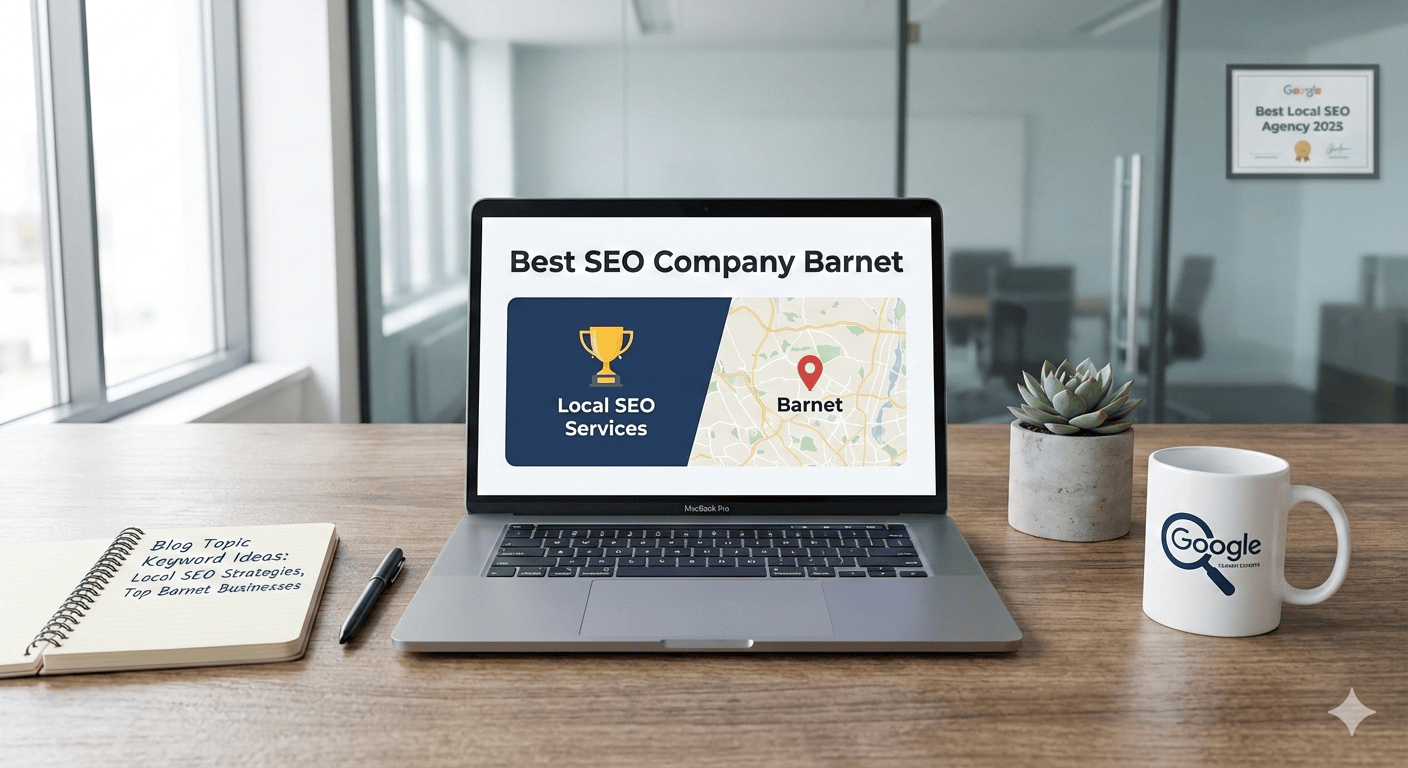
Digital marketing services are your complete online toolkit – a collection of specialised strategies designed to help your business grow online. Think of SEO for visibility, social media for connection, and paid ads for a quick traffic boost. The real magic happens when each service works together, building your brand and driving sustainable growth.
The Foundations of Your Online Strategy
Imagine you’re building a house. You wouldn’t just use a hammer for every job, would you? You’d need a saw, a measuring tape, and a level, each with a specific purpose. Digital marketing services are the tools in your toolbox for building a solid online presence. They’re a suite of tactics, each designed to tackle a specific goal, from grabbing the attention of first-time visitors to turning them into loyal customers.
But the real power isn’t just in having the tools; it’s knowing how to use them together. A brilliant strategy weaves multiple services into a single, cohesive plan, creating a powerful effect where the whole is far greater than the sum of its parts. This guide will walk you through each tool, explaining what it does and how it fits into the bigger picture, so you can build a marketing plan that truly works for you.
What’s in the Toolkit?
To give you a quick overview of the main players, here’s a simple table breaking down the core services and what they’re best used for.
Key Digital Marketing Services at a Glance
| Service | Primary Goal | Best For |
|---|---|---|
| SEO | Long-term organic visibility | Building sustainable traffic and authority |
| PPC | Immediate, targeted traffic | Quick lead generation and promotions |
| Social Media | Community building and engagement | Brand awareness and customer relationships |
| Content & Email | Nurturing leads and building trust | Establishing expertise and direct communication |
This table is just a starting point. Every business has different needs, but understanding what each of these tools does is the first step toward making an informed decision.
Here’s a slightly deeper look:
- Search Engine Optimisation (SEO): This is the long game. It’s all about making your website more visible on search engines like Google without paying for ads. You’re earning your traffic, not buying it.
- Pay-Per-Click (PPC) Advertising: Need results yesterday? PPC gives you that instant visibility by placing paid ads right at the top of the search results.
- Social Media Marketing: This is where you build your community. It’s about engaging with customers on the platforms they already use and love.
- Content and Email Marketing: This powerful duo works to build trust. You provide genuine value through helpful content and keep the conversation going with a direct line of communication via email.
Take a look at this image. It breaks down the core components of SEO, which is a fundamental service for pretty much any online strategy.
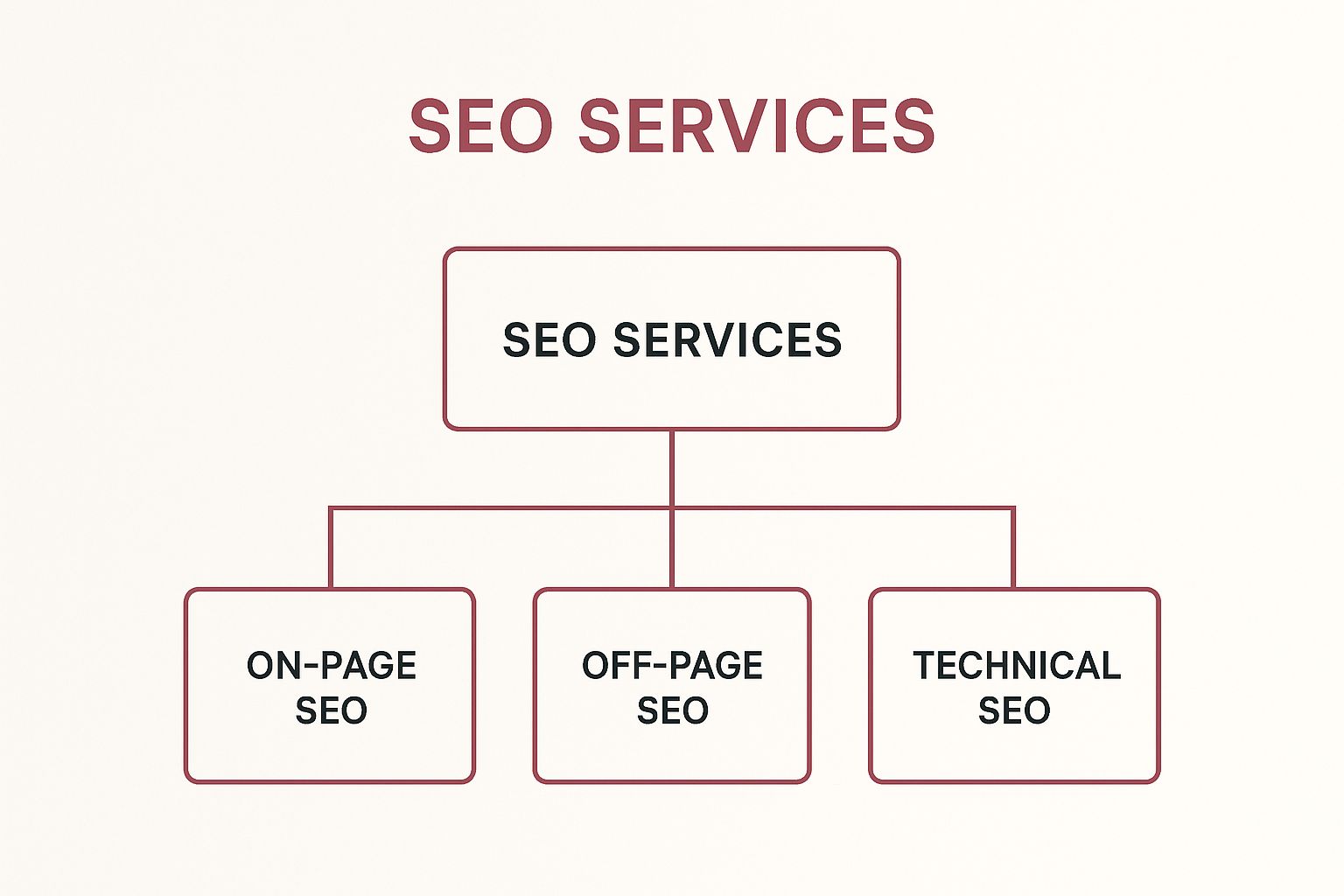
As you can see, a successful SEO effort needs a good balance of on-page content, off-page authority (like links from other sites), and a technically sound website.
By combining these different services, you create a robust strategy that doesn’t just rely on one source for all your traffic or leads. It’s about building a stable, multi-faceted online presence that can handle whatever comes its way and deliver consistent results over time.
For businesses focused on their immediate area, these tools are especially powerful. A well-rounded approach is absolutely key if you want to dominate local search in 2025 and make sure local customers can find you without any trouble. In the sections that follow, we’ll dive deeper into each of these services.
Building Your Foundation with SEO
Imagine your website is a brand-new book you’ve just placed in a library the size of London. How on earth will anyone ever find it amongst the millions of others? That’s where Search Engine Optimisation (SEO) comes in. Think of it as the art of cataloguing your book perfectly so the librarian—in this case, Google—can confidently hand it to the right person when they ask for something you offer.
This isn’t about finding sneaky loopholes or quick tricks. It’s about earning a prominent spot on the digital shelf through genuine effort.
SEO is your long-game strategy for attracting a steady stream of high-quality visitors without having to pay for every single click. It’s one of the most vital digital marketing services because it builds trust and cements your brand as a credible voice in your field. Unlike paid ads that stop the moment you stop paying, the results of good SEO compound over time, creating a valuable, sustainable asset for your business.
The Three Pillars of Modern SEO
To really get your head around how SEO works, it helps to break it down into three core components. Each one supports the others, and if one is weak, the whole structure can feel a bit wobbly. A truly successful strategy needs a balanced approach across all three.
- On-Page SEO: This is everything you do on your website itself. It’s all about creating high-quality, relevant content that directly answers the questions your potential customers are tapping into search engines.
- Off-Page SEO: This part focuses on building your website’s authority and reputation across the wider internet. Mostly, this means earning links from other reputable websites, which act like votes of confidence in Google’s eyes.
- Technical SEO: This ensures your website’s backend is built properly so search engines can easily crawl and understand it. If the librarian can’t easily read your book’s layout, it’s not going to get recommended.
These three elements work in harmony to signal to search engines that your website is a trustworthy, valuable resource that deserves to be seen.
“SEO is not something you do anymore. It’s what happens when you do everything else right.”
— Chad Pollitt, Co-founder of Relevance
This quote absolutely nails the essence of modern SEO. It’s the natural result of a holistic effort to give your users the best possible experience, from the words they read to how quickly your pages load.
Why On-Page SEO Is Your Starting Point
Everything kicks off with what’s actually on your website. On-page SEO is much more than just scattering a few keywords around; it’s about deeply understanding what a user is trying to achieve with their search. Are they looking for information, comparing products, or are they ready to pull out their wallet?
Your content has to match that intent. For instance, someone searching for “best running shoes for flat feet” is probably still in the research phase. A detailed comparison guide would be far more helpful to them than a simple product page.
A solid on-page strategy includes:
- Keyword Research: Pinpointing the exact phrases your target audience uses.
- High-Quality Content: Crafting genuinely helpful articles, guides, and pages that solve user problems.
- Optimised Titles and Headings: Structuring your content logically so both people and search engines can easily grasp its hierarchy and focus.
Building Authority with Off-Page Signals
Think of off-page SEO as your website’s public relations campaign. When another respected website links to your content, it’s basically telling Google that you’re a credible source of information. This is one of the most powerful ranking factors out there.
It’s like getting a recommendation. A link from a major industry publication is like a glowing review from a well-known expert—it carries a lot more weight than a link from some unknown blog. Building these relationships and creating content that people genuinely want to link to is a cornerstone of any serious SEO effort. If you want to dive deeper, you can find some excellent small business marketing tips here that cover how to start building your brand’s authority online.
The Importance of a Solid Technical Foundation
Finally, technical SEO is the invisible framework holding everything together. It’s the behind-the-scenes work that makes sure your site is fast, secure, and a breeze for search engine crawlers to navigate. This covers things like site speed, mobile-friendliness, and using structured data.
You could have the most brilliantly written content in the world, but it will struggle to rank if the website is slow, broken, or confusing for search engines to index. A clean technical setup is the non-negotiable groundwork that makes sure all your hard work on content and outreach doesn’t go to waste.
Driving Immediate Traffic with PPC Advertising
If SEO is the patient craft of building your brand’s forever home online, then Pay-Per-Click (PPC) advertising is like renting a massive, flashing billboard on the busiest digital motorway. It’s a seriously powerful way to put your business directly in front of potential customers, right at the very moment they’re searching for what you sell.
Unlike SEO, which is a slow burn, PPC gets you seen almost instantly. The idea is simple: you bid on specific keywords relevant to your business. When someone searches for those terms, your ad can appear right at the top of the search results. You only pay when someone actually clicks on your ad, making it a highly targeted and incredibly measurable way to advertise.
This speed and precision make PPC one of the most popular digital marketing services for businesses that need to generate leads, test a new idea, or drive traffic for a specific promotion now.
How PPC Works in the Real World
Let’s make this practical. Imagine you run a private dental practice in North London and you want to attract more patients for teeth whitening. With a PPC campaign, you can create a targeted ad that shows up whenever someone in your local area searches for “teeth whitening North London” or “best cosmetic dentist near me.”
You’re in complete control. You set a daily budget so costs never spiral, choose the exact geographic areas you want to target, and can even schedule your ads to run only during your business hours. This level of control means every penny of your marketing spend is focused on attracting the most relevant customers who are actively looking for you.
While SEO is vital for long-term, sustainable growth, most UK businesses use both to create a balanced strategy. In fact, while 77% of UK businesses invest in SEO to build that organic foundation, 65% also use paid search advertising like Google Ads to capture customers who are ready to buy. It’s worth noting that social media marketing is the most popular channel, used by 89% of marketers. This ties in with the fact that nearly half of all Google searches (46%) in the UK have local intent, reinforcing the need for both paid and organic local marketing. You can read more UK digital marketing facts and insights to see how these strategies work together.
This integrated approach means you can build your brand’s authority with SEO while simultaneously driving immediate traffic and leads with PPC.
Understanding Different Types of PPC Campaigns
PPC isn’t a one-size-fits-all tool; it’s more like a flexible toolkit with different ad types designed for specific goals. Getting your head around the main options helps you choose the right approach for what you want to achieve.
Here are the most common types of PPC ads you’ll come across:
- Search Ads: These are the simple text-based ads you see at the top of Google’s search results. They’re perfect for grabbing the attention of people with high intent – those actively searching for a specific product or service.
- Display Ads: Ever see those visual, image-based ads that follow you around the internet on different websites and apps? That’s the Google Display Network. These are fantastic for building brand awareness and retargeting people who’ve already visited your site.
- Shopping Ads: If you run an e-commerce business, these are a must. Shopping ads showcase your products directly in the search results, complete with images, prices, and your brand name. They make it ridiculously easy for people to browse and buy.
The real beauty of PPC is how measurable it is. Every single click, every conversion, and every pound spent can be tracked. This allows you to see exactly what’s working and what isn’t, giving you the data you need to justify your spending and get a clear return on investment.
By analysing your campaign performance, you can constantly refine your keywords, tweak your ad copy, and adjust your budget to improve your results. Whether your goal is to make the phone ring, get someone to fill out a contact form, or make a direct sale, PPC gives you a fast and effective way to make it happen.
Connecting with Customers on Social Media

Forget the idea of social media being a digital megaphone for your latest offers. It’s not. Think of it more like the modern town square – a bustling hub where your customers hang out, chat, and share what’s on their minds. To do well here, you need to stop broadcasting sales pitches and start building a real community.
The real secret is shifting your mindset from selling to serving. People scroll through Instagram, Facebook, and TikTok to connect, to be entertained, and maybe to learn something new. The brands that get this, the ones that join the conversation instead of interrupting it, are the ones that win. This part of your digital marketing services mix is all about turning passive followers into genuine, loyal fans who will happily spread the word about your business.
Finding Your Voice and Your Audience
Before you even think about posting, you need to nail down two things: who you are and who you’re talking to. Your brand’s “voice” is its personality. Are you the polished, authoritative expert you’d see on LinkedIn? Or are you the fun, quirky creator that goes viral on TikTok? Whatever it is, it has to be consistent.
Just as important is knowing where your ideal customers actually spend their time online. A local restaurant, for instance, will likely get huge traction on Instagram and Facebook by posting mouth-watering food photos and clips of happy customers. A B2B consultancy, on the other hand, will find far more valuable connections on a professional network like LinkedIn. Don’t spread yourself thin trying to be everywhere; focus your energy where it’ll make the biggest impact.
Creating Content People Actually Want to Share
Once you’ve figured out your voice and your platform, it’s time to start creating things people care about. Great social media content isn’t a thinly veiled advert; it offers real value. It’s your opportunity to pull back the curtain, show the human side of your business, and build that all-important trust.
Need a few ideas to get started?
- Behind-the-Scenes Glimpses: Show your team in action, the care that goes into making your product, or just a day in the life of your business. It builds transparency and makes people feel like they know you.
- Helpful Tips and Tricks: A local driving instructor could post short videos on mastering a parallel park. A dentist could create a simple graphic showing the best foods for healthy teeth. This positions you as the go-to expert.
- User-Generated Content (UGC): Get your customers involved! Encourage them to share photos using your products or visiting your location. When you repost their content, it acts as powerful social proof that real people love what you do.
The aim is to build a feed that people genuinely look forward to seeing because it adds a little something to their day.
Social media success is about building relationships. It’s a long-term investment in community and trust, not a shortcut to immediate sales. When you focus on helping and engaging, the loyalty and sales will follow naturally.
Reaching New Audiences with Paid Social Ads
Organic content is brilliant for nurturing your community, but paid social advertising is how you reach a much wider, and incredibly specific, audience. Platforms like Facebook and Instagram have ridiculously powerful targeting tools that let you put your message directly in front of people based on their location, interests, online behaviour, and so much more.
For example, a new private dental practice in North London could run a teeth whitening campaign shown only to people aged 25-55, within a 10-mile radius, who have shown an interest in cosmetic procedures. That level of precision is a game-changer, ensuring your budget is spent talking to the people most likely to become customers.
The potential is massive. Social media advertising in the UK is projected to pull in £9.95 billion in revenue in 2025. With around 79% of the UK population—that’s about 54.8 million people—using social media, it’s one of the most direct ways to engage with modern customers. You can discover more UK social media statistics to see just how big the opportunity is.
Nurturing Relationships with Content and Email
Think of content marketing as your chance to be the most helpful, approachable expert in your field. It’s all about creating and sharing genuinely useful stuff—blog posts, guides, videos, you name it—that actually answers the questions keeping your audience up at night. This isn’t about a hard sell. It’s about solving their problems and building a foundation of trust long before they even think about buying something.
But once you’ve got their attention, how do you keep the conversation going? That’s where email marketing comes in. Email is your direct, personal line to the people who have already put their hands up and said, “Yes, I want to hear more from you.” This dynamic duo of content and email is one of the most effective digital marketing services for turning casual visitors into a real community and, eventually, into loyal customers.
Building Trust Through Valuable Content
Honestly, content marketing is the engine that drives so much of a modern marketing plan. It feeds your SEO efforts by creating keyword-rich pages for Google to find and rank. It gives you something valuable to share on social media. And it’s the perfect reason for someone to hand over their email address.
The real key is to flip your perspective from “what can I sell?” to “how can I help?” When you consistently offer value without asking for anything in return, you position your brand as a credible and trustworthy voice. People start seeing you as the go-to source in your industry.
A solid content strategy often involves:
- Blog Posts: Answering common customer questions, sharing your take on industry news, or walking people through step-by-step tutorials.
- Guides and Ebooks: Taking a deep dive into a tricky subject, offered in exchange for an email address. This is a classic way to build your contact list.
- Videos: Showing people how to use a product, sharing customer success stories, or even just giving a behind-the-scenes look at your business.
This approach builds a positive relationship from the very first click. So when it’s finally time for them to make a purchase, your brand is already top of mind because you’ve been the one helping them all along.
Turning Attention into Connection with Email
Having a great blog or a popular YouTube channel is brilliant, but just hoping people will remember to come back is a risky game. Email marketing is the bridge that closes that gap. It gives you a way to proactively continue the conversation, sending personalised, helpful content straight to their inbox.
This isn’t about spamming people with daily promotions. Good email marketing is about continuing the relationship you started with your content. It’s about segmentation—sending the right message, to the right person, at the right time. You wouldn’t send a “welcome to the list” email to a customer who’s been with you for five years, would you?
“Email has an ability many channels don’t: creating valuable, personal touches—at scale.”
— David Newman, Marketing Expert
That’s the core strength of email. You can set up automated sequences that nurture new leads, send out special offers to your most loyal customers, or share your latest blog post with people who’ve shown an interest in that specific topic. Every single email reinforces your value and keeps your brand relevant.
The Power of the Content and Email Partnership
When you get content and email working together, they create a brilliant, self-sustaining cycle of attracting and nurturing leads. Your fantastic content brings visitors to your site, and you offer them an even juicier piece of content (like a checklist or a guide) in exchange for their email.
Once they’re on your list, you can use email to:
- Share your latest blog posts, driving repeat traffic back to your website.
- Offer exclusive tips and insights they can’t get anywhere else.
- Send personalised promotions based on what they’ve looked at or bought before.
This integrated approach doesn’t just generate leads; it builds proper relationships. It turns a one-time visitor into an engaged subscriber who feels genuinely understood and valued by your brand, making them far more likely to stick around for the long haul.
Choosing the Right Marketing Mix for Your Business
Jumping into the world of digital marketing can feel a bit like standing in front of a massive buffet. Everything looks good, but you can’t possibly pile it all on your plate. The secret isn’t trying a bit of everything, but picking the combination that actually satisfies your appetite—your specific business goals.
There’s no magic, one-size-fits-all formula here. The right strategy for a local dentist trying to get more bookings will look totally different from an e-commerce brand wanting to sell products nationwide. The first step is always to stop chasing trends and start asking the right questions.
Define Your Primary Business Goal
Before you do anything else, you need total clarity on what you actually want to achieve. Are you after a quick injection of sales to hit this quarter’s targets? Or are you playing the long game, building a brand that’ll be a household name in five years? Your answer points you in the right direction.
- For immediate sales and leads: PPC advertising is your best mate. It puts your business right in front of customers who are actively searching for what you offer right now.
- For long-term brand building and authority: SEO and content marketing are essential. They build a sustainable foundation of trust and organic traffic that pays off over time.
Modern marketing is all about getting tangible results. A 2025 survey of over 500 UK businesses found that 54% prioritised increasing sales revenue as their main objective, showing a clear shift towards data-driven outcomes. You can discover more insights on UK digital marketing statistics to get a better feel for this trend.
Analyse Your Budget and Resources
Your budget is a massive factor in this decision. While some marketing services need a significant upfront investment, others are much more accessible for businesses on a tighter budget. You need to be realistic about what you can commit, both in money and time.
For instance, a full-on PPC campaign on Google Ads needs a consistent ad spend to deliver results. On the other hand, an organic social media or content strategy might require more of a time investment from you or your team if cash is tight. Planning this from the start stops you from spreading your resources too thin across too many channels. You can also explore our digital marketing strategy template to help structure your plan.
Pinpoint Where Your Customers Are
The best marketing doesn’t feel like marketing. It feels like a helpful conversation happening in the right place at the right time.
You could have the most brilliant campaign in the world, but if your ideal customers never see it, it’s completely useless. Where do they spend their time online? Are they scrolling through Pinterest for visual inspiration, hunting for professional advice on LinkedIn, or asking for local recommendations in a community Facebook group?
By looking at your goals, budget, and audience all together, you can build an integrated strategy. This is where each service supports the others—SEO brings in organic traffic, your content nurtures them, social media builds a community, and PPC captures immediate demand. This creates a powerful, cohesive plan that drives real, measurable results for your business.
Frequently Asked Questions
Diving into digital marketing often throws up a few common questions. We get it. Here are some straightforward answers to the queries we hear most from business owners just like you.
How Much Should I Budget for Digital Marketing?
This is probably the first question on everyone’s mind, but there’s no one-size-fits-all answer. Your budget really hinges on your specific goals, how competitive your industry is, and the services you decide to run with.
A local shop might see great results by starting with a few hundred pounds a month for some highly targeted local SEO or a modest social media ad campaign. On the other hand, a company in a crowded market aiming for aggressive growth could be investing several thousand pounds from the get-go.
The smartest way to approach it is to start with a figure you’re comfortable with. Focus on one or two channels that promise the biggest impact, and once you see a healthy return, you can confidently scale up.
How Long Until I See Results?
It’s tempting to want instant results, but patience is a virtue in marketing. The time it takes to see real traction depends entirely on the service you’re using.
- PPC Advertising: This is as close to instant as you can get. Once your ads are live, you can start seeing traffic and leads coming in within hours.
- SEO: Think of this as a long-term investment. You’re building trust with search engines, and that doesn’t happen overnight. It typically takes three to six months before you’ll notice a real shift in your rankings and organic traffic.
- Social Media & Content: You might see likes and comments pop up quickly, but building an engaged community that trusts you and buys from you takes consistent effort over several months.
Which Digital Marketing Services Are Best for a Small Business?
For most small businesses, the sweet spot is a combination of solid local SEO and one other channel where your customers spend their time.
If you have a physical location or serve a specific area, Local SEO isn’t just an option—it’s essential. It’s what gets you found by people in your neighbourhood right when they’re looking for what you offer. This is your foundation for a steady stream of relevant, ready-to-buy customers.
Once that’s covered, think about your audience. Are you a highly visual business, like a restaurant or a boutique? Instagram is probably your best bet. If you provide services to other businesses (B2B), then getting active on LinkedIn is a much smarter move.
Ready to stop guessing and start growing? The team at Fotowork specialises in creating practical digital marketing strategies that deliver real results for local businesses. Find out how we can help your business.