A Digital Marketing Strategy Template That Works
Think of a digital marketing strategy template as your business’s playbook. It’s a simple, structured document that maps out all your online marketing plans. The goal is to make sure every single thing you do from a quick social media post to a full-blown ad campaign is pulling in the same direction and aimed squarely at what you want to achieve.
Why a Template Is Your Secret Weapon
Trying to do digital marketing without a plan is a bit like trying to navigate London’s backstreets with no map. You might get lucky and stumble upon a hidden gem, but you’re far more likely to get lost, burn through your budget, and end up miles from where you wanted to be. For any local UK business, a solid marketing template is the tool that stops that from happening.
This isn’t about creating more paperwork. It’s about getting crystal clear on what you’re actually trying to do. Does success look like more bookings for your Bristol bakery’s afternoon tea slots? Or is it about getting the phone to ring more often at your Manchester mechanic shop? A template forces you to define that from the very beginning.
When you have that kind of structure, the impact on your bottom line is immediate and powerful.
Gaining Clarity and Focus
Without a template, marketing often feels like you’re just reacting to things. You post on Facebook because you feel you should, or you boost a post without really knowing who you’re trying to reach. A good template flips that on its head. It helps you:
- Set proper goals: Instead of a vague wish like “get more customers,” you’ll set a clear, measurable goal like “increase online bookings by 15% in the next three months.”
- Really understand your customers: It pushes you to think deeply about who your local customers are what they need, their daily habits, and where they’re actually spending their time online.
- Get everyone on the same page: If you have staff helping out, a template ensures everyone knows the game plan and is working towards the same result.
Making Every Pound Count
For a small local business, every penny in the marketing budget has to work hard. A template is your best defence against wasting money. It makes sure you put your resources into the right places the places that will actually bring you a return.
A well-organised strategy is the difference between spending money on marketing and investing in it. It stops you from throwing cash at channels that don’t work for your business and helps you double down on what does.
For instance, after a bit of planning, you might discover that hyper-local Google Ads bring in far more qualified leads for your plumbing service than generic Instagram promotions ever could. That kind of insight only comes from the planning process a digital marketing strategy template provides, turning guesswork into a smart business decision.
Knowing Your Local Audience Inside and Out

Before you spend a single pound on ads, we need to get one thing straight: who are you actually talking to? The entire success of your digital marketing strategy template hangs on this one question.
Vague ideas like “men in their 40s” or “young families” just won’t cut it anymore. That’s casting the net too wide. We need to go deeper.
The goal is to build a detailed customer persona a fictional character, sure, but one who is built on real data and represents your perfect customer. Think of them as a real person. What’s their name? What local pub do they pop into after work? What problem are they trying to solve that you have the perfect solution for?
This isn’t just a bit of creative fun; it’s a strategic necessity. When you know your audience this well, every single thing you create, from a quick Facebook ad to a detailed blog post, will feel like it was written just for them.
Building Your Local Persona From Scratch
Crafting a persona that actually works means digging into data, not just guessing. The good news is, you’re probably sitting on a goldmine of information already. The best place to start is with the people who are already giving you their business.
- Dive into your customer data: Open up your sales records or CRM. Can you spot any patterns? Look for postcodes, age groups, or specific buying habits that keep popping up.
- Chat with your front-line team: Your staff who interact with customers every day hold invaluable insights. Ask them about the common questions, worries, and compliments they hear on a loop.
- Use free online tools: Tools like Google Trends are brilliant for seeing what people in your specific town or region are searching for. This is a direct line into their interests and pain points.
Let’s take a local interior designer. Through her data, she might discover her best clients aren’t just generally wealthy homeowners. They are, more specifically, professionals in their late 30s living in Victorian terraced houses in a particular neighbourhood. That level of detail is pure marketing gold. You can see just how this kind of targeted knowledge shapes a business’s approach in real-world examples, like this case study for Julian Hurst Interiors. https://fotoworkuk.com/case-study-julian-hurst-interiors/
Knowing your customer isn’t just about demographics. It’s about understanding their motivations, their daily routine, their online habits, and the local context that shapes their lives.
From Data Points to a Real Person
Once you’ve done your homework, it’s time to bring your persona to life. Give them a name, a job, and a backstory.
What does their typical day look like? What local Facebook groups are they part of? What’s their biggest frustration when it comes to the service you offer?
The UK digital advertising market is ballooning, with a projected compound annual growth rate of 15.1% between 2025 and 2030. A massive chunk of that is driven by mobile, which accounted for 58.34% of all digital ad revenue in 2024. This shows exactly why you need to know where your audience is scrolling.
By creating this detailed picture, you make sure your marketing messages land in the right place, at the right time, and truly connect with the local people you want to reach. This persona becomes the rock-solid foundation for your entire plan.
Choosing Where to Show Up Online
Right, so you know exactly who you’re trying to reach. The next big question is: where do they actually hang out online? A classic mistake I see local businesses make is trying to be everywhere at once. They’re on every social media platform, running Google ads, and firing off emails left, right, and centre. That’s a one-way ticket to burnout and a drained bank account.
The secret isn’t to shout louder; it’s to show up smarter. Your digital marketing strategy template should be your guide to pinpointing the few key places where your ideal customers are already spending their time. For a local business, this is all about precision, not trying to blanket the entire internet.
It comes down to picking the channels that give you the best bang for your buck. Do you really need to be the top result on Google Maps, or will a buzzing local Facebook group bring more people through your door?
Finding Your Digital High Street
Think of the different online channels like various spots around town. Some are like the busy high street, others are more like a quiet community centre. Your job is to work out where your specific customers gather.
- Hyper-Local SEO: This is your digital shopfront. If your business relies on local footfall like a dentist’s surgery, a café, or a garage being visible on Google Maps and in local search results is non-negotiable. It’s about popping up the very moment someone types “best coffee near me” into their phone.
- Targeted Social Media: Platforms like Facebook and Instagram are brilliant for visual businesses and for anyone wanting to build a proper local community. The real magic, though, is in their advertising tools. You can target users right down to a specific postcode, age group, or interest.
- Community Groups and Forums: Never underestimate the power of local online groups. A genuinely helpful comment in a neighbourhood Facebook group can build more trust and goodwill than a glossy, expensive ad ever could.
This visual guide breaks down the simple process of aligning your channels with your audience.
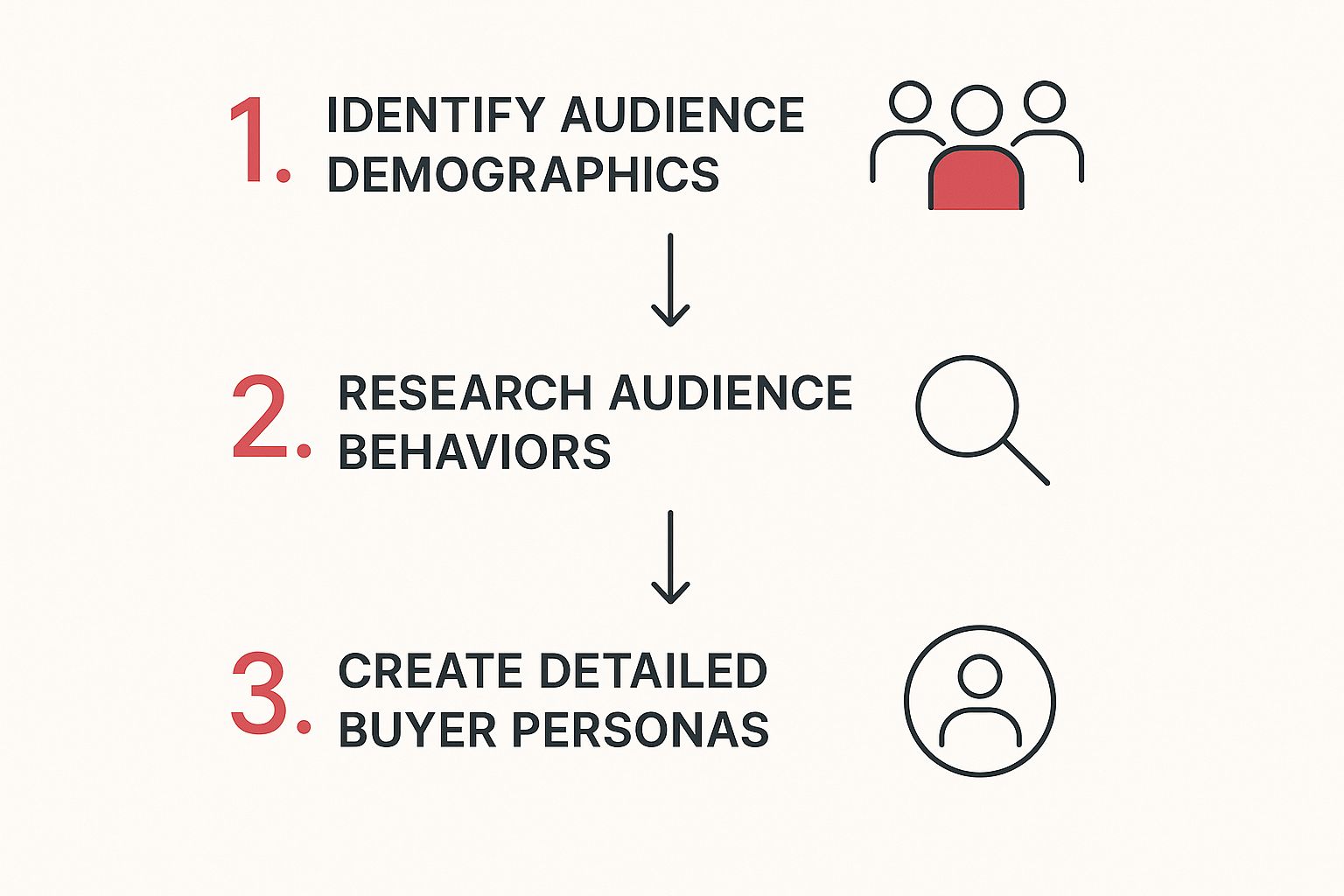
As you can see, choosing your channels is the final piece of the puzzle, and it only works if it’s built on a solid understanding of your customers first.
Matching Your Business to the Channel
The right channels for you depend entirely on what kind of business you run. A B2B IT consultant in Birmingham is going to need a very different online presence from a dog groomer in Brighton.
For service-based businesses that people actively search for think plumbers, electricians, or solicitors owning local search is absolutely critical. If that sounds like you, our guide can show you how to dominate local search in 2025. Your main goal is to make it incredibly easy for a potential customer to find and call you the second they have an urgent problem.
On the flip side, if you run a café, a boutique clothing shop, or a local gym, your efforts might be better spent on social media. You can use platforms like Instagram to show off your products, share photos from happy customers, and run location-based offers that tempt people to pop in.
Your marketing shouldn’t feel like an interruption. When you choose the right channels, you meet your customers where they already are, becoming a welcome and relevant part of their online world.
By being selective and strategic, you ensure your marketing budget is an investment that delivers real, tangible results. It connects you with the local customers who truly matter, and that focused approach is the cornerstone of any successful digital marketing plan.
Creating Content That Actually Connects

Alright, so you’ve got a handle on who your ideal local customer is and where they hang out online. That’s a huge step forward. But now for the tricky part: what do you actually say to them? This is where so many small businesses miss the mark, defaulting to just blasting out offers and sales pitches.
Let’s shift that mindset. The real goal isn’t just to sell something; it’s to build a genuine connection. You want to become the trusted, go-to name in your community. When you consistently offer real value, people don’t just buy from you once they turn into loyal fans who tell their friends about you. This section of your digital marketing strategy template is all about mapping out the content that makes that happen.
It all boils down to creating content that’s genuinely helpful, interesting, and speaks their language. It’s the difference between being just another advert they scroll past and becoming a familiar, welcome voice in their social media feed.
Weaving Local Flavour into Your Content
Your biggest advantage as a local business is right there in the name: you’re local. You understand the community, the in-jokes, and the daily life in a way a massive national chain never could. It’s absolutely vital to let this authentic personality shine through in everything you create.
Forget generic blog posts. Instead, think about what really matters to people in your specific area.
- A coffee shop in Liverpool could write about the best local dog-walking spots (that just happen to end near their café).
- A financial advisor in Leeds might create a simple guide on local grants available for first-time homebuyers in West Yorkshire.
- A boutique in Brighton could post a quick video showing how to style an outfit for a specific local festival, like The Great Escape.
See the difference? This stuff builds real rapport and positions you as an expert in your local space, not just in your industry.
Your content should never feel like it could be for anyone, anywhere. It should feel like it was made specifically for the people in your town, by someone who actually gets it.
The Power of Social Media and Video
Social media is so much more than a digital billboard for your opening times. It’s where you can have actual conversations and build a proper following. The UK social media advertising market is projected to hit a massive £9.95 billion by 2025, with around 79% of the entire UK population actively using these platforms. That really highlights the scale of the opportunity right on your doorstep. You can discover more UK social media insights to see just how vast this audience is.
And you don’t need a Hollywood budget to make an impact, especially with video. Honestly, your smartphone is more than good enough to create compelling content.
- Go behind the scenes: Show your team at work or unbox a new delivery. People love seeing the human side of a business. It builds trust.
- Share quick tips: Post a 30-second video with a genuinely useful tip related to your services. It’s fast, valuable, and super shareable.
- Feature customer spotlights: Ask a happy customer (with their permission, of course!) if they’d mind talking about their experience. Nothing builds trust faster than a real, local recommendation.
By focusing on content that helps, entertains, and connects with your community, you’ll build an audience that knows and trusts you. Then, when it comes time for them to make a purchase, your business will be the first one they think of.
Tracking What Works and Ditching What Doesn’t
You’ve built your plan, you know your audience, and you’re putting great content out there. Fantastic. But a marketing strategy isn’t something you create once and then stick in a drawer to gather dust.
The real magic happens when you start paying close attention to what’s actually bringing in customers and have the confidence to stop doing what isn’t. This is where your digital marketing strategy template comes to life.
It’s about shifting your marketing from a set of hopeful guesses into a series of smart, data-backed decisions. And don’t worry, this isn’t about getting lost in endless spreadsheets full of confusing numbers.
For a local business, it’s about focusing on a few key metrics that genuinely tell you if you’re moving closer to your goals. Are more local people finding your website? Are your social media posts actually leading to phone calls? These are the questions that truly matter.
Demystifying Your Key Metrics
Getting started with tracking can feel a bit much, but free tools like Google Analytics are incredibly powerful and surprisingly easy to get to grips with. Once it’s set up, you can start looking at the numbers that tell a real story about your local performance.
Here are a few metrics that are absolutely worth your attention:
- Website Traffic from Your Service Area: This is a big one. You can filter your website visitors by location to see if you’re attracting people from your target towns and postcodes. If you’re a Bristol-based plumber but all your traffic is coming from Glasgow, you know something needs a tweak.
- Local Search Rankings: Are you showing up when someone searches for your service in your town? Tracking your position for key local search terms (like “best hairdresser in Camden”) is vital. Improving this is a huge part of effective Google Maps SEO, which can be a game-changer for getting people through the door.
- Conversion Rate: This simply means the percentage of website visitors who take a specific action like filling out a contact form, calling your number, or booking an appointment. This metric tells you if your website is actually doing its job.
The Simple Monthly Review
You don’t need to be glued to these numbers every day. A simple, focused review once a month is more than enough to keep your strategy on the right track. This regular check-in is your chance to spot trends and make quick, smart decisions.
Think of it like a monthly health check for your marketing. It’s your opportunity to see what’s thriving, what needs a bit of care, and what needs to be cut back to allow other things to grow stronger.
During your review, ask yourself a few direct questions. Which blog post brought in the most local traffic last month? Did that Facebook ad campaign actually lead to any sales? By answering these, you can start doubling down on the tactics that deliver a real return.
The digital marketing scene in the United Kingdom is constantly growing, with digital ad revenue expected to clear £40 billion in 2025. A big part of this is the use of AI, with a staggering 94% of UK digital marketers already using AI tools this year.
Keeping an eye on your data helps you stay sharp and adapt. This adaptive approach ensures your template remains a powerful tool for growth, not just a static document. You can discover more insights about UK digital marketing trends on searchhog.co.uk.
Got Questions About Marketing Templates?

When you’re diving into a proper marketing plan for the first time, it’s completely normal for a few questions to pop up. Let’s face it, you’re busy running your business, and it’s natural to wonder if you’re getting it right.
So, let’s tackle some of the most common hurdles I see small business owners face when they start using a digital marketing strategy template. The goal here is to give you clear, straightforward answers so you can move forward with confidence.
How Much Should I Actually Budget for Marketing?
This is the big one, isn’t it? The honest answer is: it really depends. There’s no magic number that fits everyone, but a solid starting point for a small local business is often between 5% and 10% of your total revenue.
The real key, though, is to start small and scale up smartly. You don’t need a massive budget to get going.
- Start with the ‘free’ stuff: Things like optimising your Google Business Profile or posting in local Facebook groups only cost you your time. Make them count.
- Dip your toe in with a small ad spend: Try putting a modest amount say, £50 to £100—behind a very specific, targeted social media ad. See what kind of traction it gets.
- Double down on what works: Once you see a channel delivering a real return on investment (ROI), that’s when you can confidently shift more of your budget there.
Your template is the perfect tool to help you track this, making it crystal clear where your money is working hardest.
Your best budget is a flexible one. Begin with what you can comfortably afford, measure everything, and be ready to reinvest in the tactics that are actually bringing customers through your door.
How Long Does This Take? When Will I See Results?
Patience is probably the most underrated tool in marketing. While some tactics, like a well-aimed Google Ad, can bring in traffic almost instantly, the most powerful parts of your strategy are more of a slow burn. Building a solid local SEO presence or a loyal following on social media simply takes time and consistency.
As a general rule, you should start seeing meaningful data and early signs of success within the first 90 days. This might look like more website visits from your local area or a noticeable increase in followers on your social channels.
Try not to get discouraged if sales don’t spike in the first few weeks. The initial phase is all about laying a solid foundation. Think of your digital marketing strategy template as a long-term tool for steady, sustainable growth, not just a quick fix for a slow Tuesday.
Feeling ready to build a marketing plan that genuinely works for your local business? We specialise in creating strategies that get you noticed by the customers right in your area. Let’s build your winning strategy together.