Why Google’s AI Search Guidance Is Hiding the Real Trap
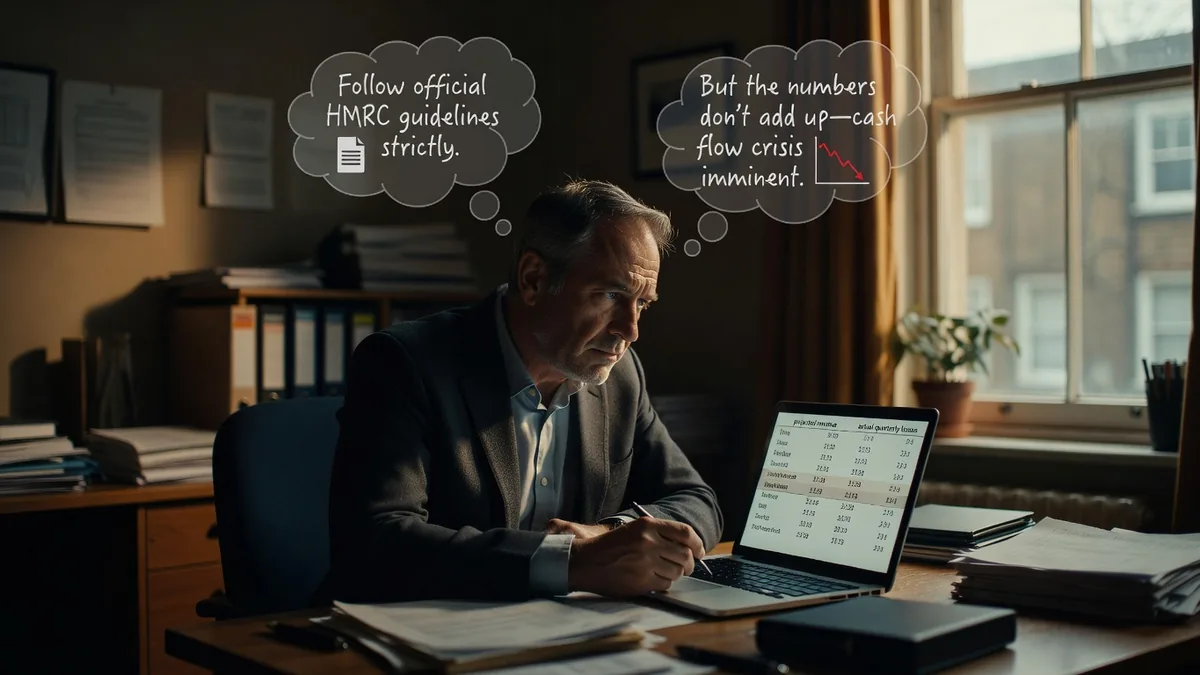
Last week, Google handed out fresh guidance on how to optimise for AI search. It sounded reasonable. Make your expertise visible. Use structured data. Build trust signals. Reasonable advice, right?
Here’s what nobody’s saying out loud: Google’s telling you to optimise for a system Google itself doesn’t fully control anymore.
The real problem isn’t the advice. It’s that Google’s guidance assumes AI search works the way Google wants it to work. It doesn’t. And that gap between the theory and the reality is where most North London businesses are getting trapped.
The Guidance Says: Make Your Expertise Machine-Readable
Google’s right about this part. A review of 19 businesses found the same problem repeatedly: strong expertise buried in content AI systems can’t reliably interpret. So the fix sounds simple. Use schema markup. Make your credentials explicit. Structure your data.
Except here’s what they’re not telling you: being machine-readable doesn’t guarantee being machine-cited.
You can have perfect schema. Crystal-clear author credentials. Pristine structured data. And Google’s AI Overviews still might pull a citation from a competitor’s vague blog post instead. Why? Because AI search is generating summaries based on probability weightings that don’t always align with accuracy. Google knows this. They’ve quietly acknowledged it. But the guidance they hand out focuses on what you can do, not on what the system is actually doing.
That’s not malicious. That’s just incomplete.
The Real Trap: Optimising for Guidance Instead of Reality
The trap is this: if you spend all your energy following Google’s official guidance, you’re optimising for a version of AI search that exists in documentation, not in production.
Google’s May core update hit the same week as their I/O announcements. Mixed messaging. Some sites went up. Some went down. The guidance didn’t explain which sites should expect which outcome. Why? Because Google’s own systems are running against different ranking signals than the guidance assumes.
A small business owner in Finchley following the guidance might improve their schema, clarify their expertise, and still lose AI Overview visibility to a larger competitor who’s optimised for something Google hasn’t officially acknowledged yet: brand recognition and authority at scale.
That’s not a failure of the advice. That’s a failure of completeness.
What Your North London Business Actually Needs to Know
The guidance is incomplete because Google is still figuring out how AI search should work versus how it’s actually working. Here’s the insider angle:
First, machine-readability helps but doesn’t guarantee visibility. You still need domain-level authority, business signals beyond just content structure, and search volume that makes you interesting to an AI system trained on probability. A perfectly structured dental practice in Barnet might still get overlooked in AI Overviews if a larger competitor has stronger authority signals across the web.
Second, Google’s guidance on AI search has a built-in conflict of interest. Google wants more people using Google Search. AI Overviews keep people in Google Search by answering their question directly. That’s good for Google. But it means Google’s optimisation guidance naturally tilts toward making your expertise summable, not necessarily toward getting your business cited. The two aren’t the same.
Third, AI search rewards different things than traditional SEO. Links used to be votes of confidence. In AI search, they’re less critical. What matters more is whether your brand and expertise appear consistently across multiple trusted sources. A North London business with strong local visibility, customer reviews, and mentions in industry publications will outrank one with perfect schema and weak authority.
Google’s guidance doesn’t say this directly because it would expose the gap between what Google claims to reward and what actually gets visibility in AI Overviews.
The Mistake Most Businesses Make
They read Google’s guidance, improve their schema and structure, and then wait for AI search traffic to appear. When it doesn’t, they assume they did something wrong with the technical implementation.
Usually, they didn’t. The guidance just left out the authority component because Google can’t easily tell you to build brand authority faster. That’s not a technical fix. That’s a business strategy that takes time.
Meanwhile, competitors who understood this gap are already building authority through:
- Getting cited in industry publications and local news
- Building a visible team and credentials beyond just schema markup
- Creating content that gets referenced and linked to by other trusted sources
- Appearing consistently across multiple platforms, not just their own site
- Accumulating customer reviews and social proof that AI systems can detect
None of this conflicts with Google’s official guidance. It just goes beyond it.
What This Means for Your Business in 2026
If you’re a small business owner in North London trying to compete in AI search, you now know something Google’s guidance doesn’t explicitly teach: optimising for AI visibility requires both technical precision and authority building. The technical part is the minimum bar. The authority part is what separates you from competitors who did the same technical work.
This means your strategy should address three layers:
Layer One: Technical Excellence follows Google’s guidance exactly. Schema markup, clear credentials, structured data, mobile optimisation. Do this first. It’s the price of entry.
Layer Two: Authority Building happens off-site. Get mentioned in local publications. Build a visible team. Accumulate customer testimonials and reviews. Make your expertise visible beyond your own pages. This is what Google’s guidance glosses over because it’s not something Google controls.
Layer Three: Consistency ties both together. Your schema credentials should match your real-world credentials. Your website should reflect your actual team and experience. Your content should align with the expertise people are finding you known for elsewhere. When these layers are misaligned, AI systems notice the inconsistency and discount your authority.
Google’s guidance doesn’t fail because it’s wrong. It fails because it’s incomplete. It tells you what to build but not what to build alongside it. The businesses that win in AI search aren’t just those following the official guidance. They’re those adding the unofficial pieces Google can’t easily prescribe.
Your Next Move
If you’ve already implemented Google’s guidance, you’re ahead of most small businesses. Don’t stop there. Audit your authority layers. Are you visible beyond your own site? Do industry publications and local directories reflect your true expertise? Can an AI system find consistent evidence of your qualifications across multiple sources?
That’s where the real edge is.
Need help mapping your authority strategy for AI search? Our SEO services are built for this reality, not just Google’s official guidance. We work with North London businesses to build both technical precision and off-site authority. Get in touch for a free consultation, or call us on 020 3355 8773.