Google May 2026 Core Update: 5 Tools to Track Real SEO Impact
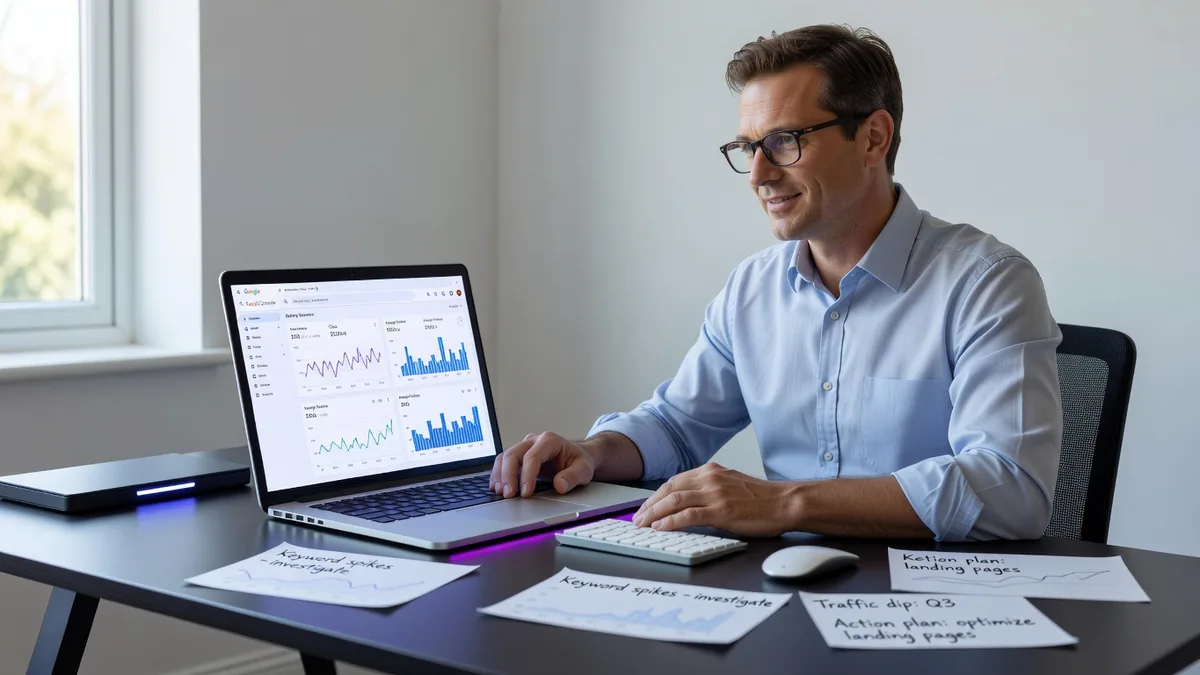
Google’s May 2026 core update landed over the weekend, and if you’re running a small business in North London, you might have noticed ranking shifts on Monday morning. The question isn’t whether the update hit. The question is: how do you know if it actually affected your website?
Most business owners panic. They refresh their rankings obsessively. They blame the update for every drop. Then they wait for it to blow over. But that’s the wrong approach.
The real work happens in the data. You need tools that cut through the noise and show you what actually changed. Here are the five tools our team recommends for tracking genuine SEO impact after a core update.
1. Google Search Console: Your Primary Signal
This is the foundation. Google Search Console shows your real traffic, real clicks, and real impressions from Google’s index. It’s free, it’s authoritative, and it’s the only source that matters.
After the May 2026 update, check your Search Console performance report over a 30-day rolling window:
- Compare clicks week-over-week. Did they drop 10% or 50%?
- Look at which queries lost visibility. Are they your moneymaking keywords?
- Check average position changes. Drops from position 3 to position 8 hurt. Drops from position 15 to position 20 don’t.
- Filter by page, search type, and device to isolate which parts of your site were affected.
If your traffic stayed flat or improved, the update didn’t penalise you. If you lost clicks on commercial keywords, you need to investigate content quality and topical authority.
2. Google Search Status Dashboard: Monitor Active Impact
Google maintains a public status dashboard for major updates. The May 2026 core update was last monitored on May 25 at 23:01 PDT, and the dashboard shows it as an active ranking system update that began May 21.
Why does this matter? Because updates roll out over time. They don’t hit all sites at once. If you check your rankings on day two and see drops, but the dashboard shows the update still rolling, your final ranking position might not be settled for another week.
Bookmark the Google Search Status Dashboard. During a major update, check it daily to understand the rollout timeline. This prevents panic-driven decisions before the update finishes.
3. Ahrefs Site Explorer: Competitive Context
Your rankings didn’t change in a vacuum. Your competitors ranked. Ahrefs Site Explorer shows you which sites gained and which lost in your industry.
After the May update, use Ahrefs to:
- Run a domain comparison of your site vs. your three main competitors.
- Check organic traffic changes over the last 30 days. Did they gain while you lost, or did everyone drop?
- Review their top-performing pages. If they gained traffic on a page about a topic you also cover, compare the depth and quality of your content head-to-head.
- Export a backlink report. Did they gain high-quality referring domains while you stayed flat? That’s a trust signal Google’s update likely rewarded.
Context changes everything. A 20% traffic drop sounds catastrophic until you see your competitors dropped 35%.
4. Semrush Sensor: Broader Market Movement
Semrush Sensor tracks top 100 ranking volatility across major keywords in real time. During the May 2026 update, you can see which industries and keyword categories saw the most movement.
Why use this? Because some sectors get hit harder than others. Financial content, health information, and local services see more frequent updates than, say, entertainment blogging.
Check Semrush Sensor to see:
- Your industry’s overall volatility percentage. High volatility (above 30%) means the update shuffled rankings widely.
- Which keyword categories in your niche were most affected.
- Whether volatility is stabilising. If the graph is flattening, the update is settling. If it’s still spiking, there’s more movement coming.
This gives you permission to stop checking rankings every hour and instead make strategic decisions based on real market movement.
5. Google Analytics 4: Traffic Verification
Search Console shows impressions and clicks. Google Analytics shows what users actually did after they arrived. These are different things.
Someone might click on your page (counted in Search Console) but bounce immediately (counted as a bounce in GA4). After the May update, reconcile both sources:
- In GA4, check organic traffic by landing page. Which pages got fewer visitors?
- Look at user behaviour. Did traffic quality change? (Lower bounce rate on a lower-traffic page might mean better targeting.)
- Compare conversion rates. If you lost traffic but conversions stayed flat, you’ve actually lost low-intent clicks, which is healthy.
The goal is clear: understand whether you lost visitors, lost good visitors, or simply lost ranking positions without meaningful traffic impact.
What To Do If You Lost Traffic
If Google Search Console shows a measurable drop in clicks or impressions on important keywords, here’s the action sequence:
- Wait 7-10 days for the update to fully settle and check again.
- Use Ahrefs to compare your content depth and structure against the sites now ranking above you.
- Check whether your pages match Google’s own guidance on E-E-A-T signals: is your author clearly identified? Do you cite authoritative sources? Is your expertise evident?
- Review backlink quality in Ahrefs. High-quality referring domains signal trust. If competitors have more, that’s a gap.
- Look at page experience metrics in Search Console. Core Web Vitals, mobile usability, and page speed all factor into ranking.
Only after running this analysis should you consider a content rewrite. Panic rewrites without data waste time.
The Real Lesson
Core updates reward quality and punish shortcuts. Google’s algorithm changes happen every few months now, but the fundamentals never change: original content, genuine expertise, authoritative sources, and clear authorship all compound over time.
For small business owners in Finchley and North London, the May 2026 update is a reminder that shortcuts don’t work. Build your website like you’re building your business: with care, authority, and real knowledge.
If you’re unsure whether the update affected your site, or you need help interpreting your data, our team can run a full analysis. We’ve tracked every major Google update since 2010, and we know what signal matters.
Our SEO services in Finchley include post-update analysis, content audits, and a clear roadmap to recovery. Book a free audit with us, or get in touch directly. Call us on 020 3355 8773.