Google I/O Core Update Hack: Skip the Panic, Track Real Signals
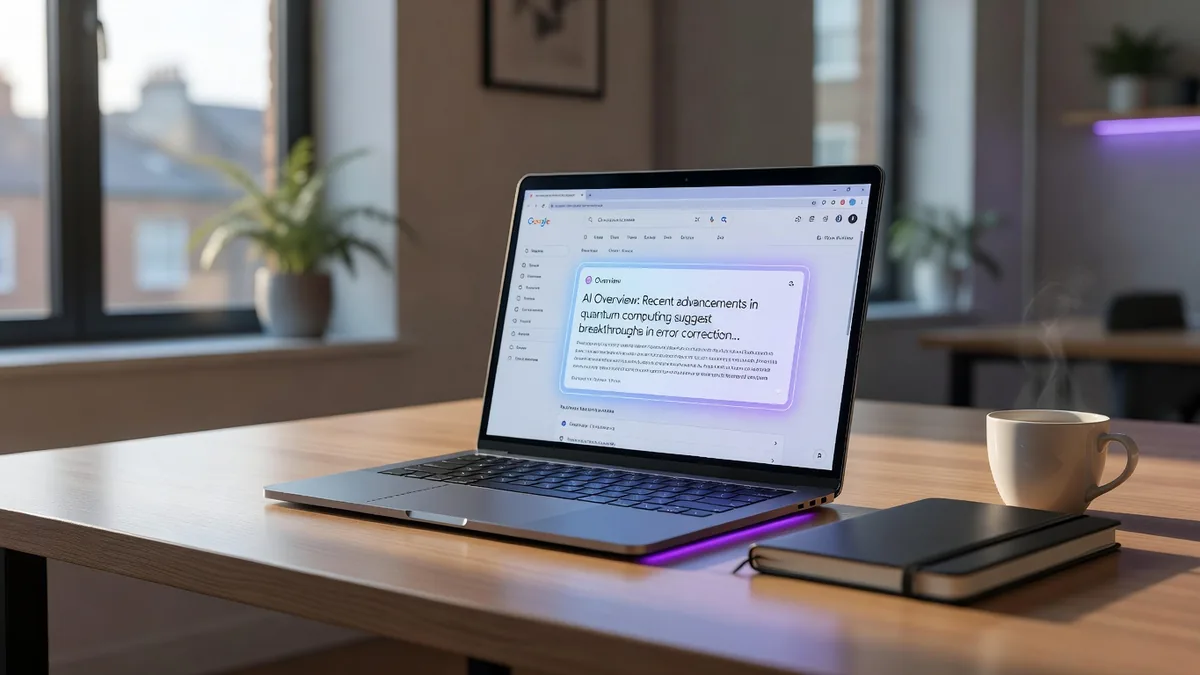
Two days after Google I/O, panic spread through marketing forums. SEO is dead. Search is over. AI Overviews have killed organic visibility.
Half the noise is real. Half is noise.
The May 2026 core update started 21 May and is still rolling out. Google Search status confirmed it’s live. What everyone’s missing is this: the risk isn’t technical. It’s economic. And there’s a shortcut that still works for North London business owners.
Why Google I/O Triggered the Panic
Google announced Gemini’s capability to answer almost any question with AI Overviews. No clicks needed. No visits to your site. The assumption is obvious: if users get answers straight from Google, why would they click through to websites?
The panic is understandable. It’s also premature.
Here’s what’s actually happening. Google isn’t ending Search. Search revenue is up. What’s shifting is who gets cited and who doesn’t. The May core update isn’t penalising SEO. It’s rewarding sites that Google trusts enough to put in front of AI systems.
The economic risk is different: if AI cites your competitor but not you, they get the visibility. You don’t. That’s not the death of SEO. That’s SEO moving faster.
The One Shortcut That Still Works
Stop obsessing over keywords. Start obsessing over being citable.
AI systems need sources it can point to. That means your content has to be:
- Specific (not vague marketing language)
- Verifiable (facts Google can cross-reference)
- Attributed (clear who wrote it and why they’re qualified)
- Original (not repackaged from ten other sites)
This isn’t new guidance. It’s Google’s E-E-A-T framework applied at machine scale. Experience, Expertise, Authority, Trust.
The hack? Most small businesses in North London still aren’t doing this. They’re still writing generic service pages with no author, no credentials, no specifics. AI systems skip those pages entirely. Meanwhile, sites that invested in real expertise and clear sourcing get cited multiple times.
One citeable page beats ten invisible ones.
What the May Core Update Actually Changed
Google’s status page says the ranking product is affected. That means where pages show up in search results. Not whether they show up.
What shifted:
- Generalist content competing with specialist content loses more rankings than before.
- Sites with shallow coverage of a topic rank lower. Deep, thorough coverage ranks higher.
- Content written for AI Overviews (clear answers, structured data, explicit sourcing) gets boosted.
- Content written only for click-through traffic gets demoted.
For a North London business, this means one thing: your website isn’t competing against every other website anymore. It’s competing to be the source AI systems trust.
Three Steps to Survive the Update (and Thrive)
1. Add Author Attribution to Everything
Every page needs a named person. Not a company. A person. “By Nish Thenuwara, Director” with a one-sentence credential. AI systems match that name against public information to verify expertise. A generic “by The Web Design Company” fails that test.
2. Make Your Answer Visible in the First Paragraph
If someone asks “how much does web design cost in Finchley,” your first paragraph must answer it directly. Not “there are many factors” or “it depends.” Give a range. Give specifics. Then explain why.
AI Overviews pull the first clear answer they find. Make sure it’s yours.
3. Link to Real Sources, Not Marketing Links
Your article should link to Google’s Search Central documentation. To industry reports. To competitor sites if they have better data. To NHS or GOV.UK for any health or regulatory claims.
This sounds counterintuitive. It works because Google uses these external signals to verify you’re being honest. A site that cites authoritative sources is more likely to be cited itself.
The Real Risk You’re Probably Missing
The economic risk isn’t that SEO stops working. It’s that you’re still optimising for the old system.
Keyword research? Still matters. But not the way it did before. Long-tail, high-volume keywords are less valuable now because AI answers them directly. What matters is being the source that AI points to.
Page titles and meta descriptions? Still important. But only because they help Google understand what your page is about so it can cite you correctly.
Backlinks? Still valuable. But they matter less than they did. Brand signals, author credentials, and content depth matter more.
If you’re still building pages around keyword targets instead of around real expertise, the May update hit you hard. And the next update will hit harder.
What to Do Right Now
Audit your top 10 pages. For each one, ask:
- Is the author clearly named with a one-sentence credential?
- Does the first paragraph answer the main question directly?
- Are there external links to authoritative sources?
- Is the depth sufficient that an AI would trust it?
If any answer is no, update that page this week. Don’t wait for the next algorithm change.
The businesses winning right now aren’t the ones panicking about the death of search. They’re the ones who realised search never died. It just got smarter about who it trusts.
North London business owners have an advantage. You know your customers. You know your industry. You have real expertise. Most of you just haven’t written it down in a way machines can understand and cite.
That gap is the real shortcut. Close it, and you’ll survive I/O. And the next update after that.